A custom CRM is estimated against the same InterLAB references as any product: a first phase with the core pipeline falls within the MVP range (2–5 million ₸), a full turnkey system with roles, integrations and reporting is 5–15 million ₸, and complex systems bridging CRM and accounting start from 10 million ₸. The main price drivers are the number of pipelines and roles, integrations (telephony, messengers, 1C, Kaspi) and data migration. Before ordering, honestly compare the cost of ownership with an off-the-shelf CRM over a 2–3 year horizon.
Contents
Budget references
2–52–5
million ₸ — first phase: core pipeline and roles
5–155–15
million ₸ — turnkey CRM with integrations
10+10+
million ₸ — CRM and accounting combined
2–42–4
months — typical timeline for a turnkey CRM
The most common estimating mistake is trying to order "everything Bitrix24 does, only tailored to us" from day one. A custom CRM is valuable because it mirrors your sales process, not because it copies the features of ready-made systems. So the first phase usually covers the core — the pipeline, the customer card, tasks — and the rest is rolled out based on data.
What drives the price
Pipelines
- Simpler
- a single sales pipeline
- More complex
- several lines of business, each with its own stages
Roles and permissions
- Simpler
- manager and head of sales
- More complex
- branches, departments, deal amounts visible by role
Lead channels
- Simpler
- website and one form
- More complex
- website, WhatsApp, Instagram, telephony, Kaspi
Integrations
- Simpler
- export to a spreadsheet
- More complex
- two-way exchange with 1C, warehouse and payments
Reporting
- Simpler
- standard pipeline reports
- More complex
- report builder, KPIs per employee
Data
- Simpler
- starting from a blank slate
- More complex
- migration from Excel and an old CRM
Custom vs off-the-shelf CRM: cost of ownership
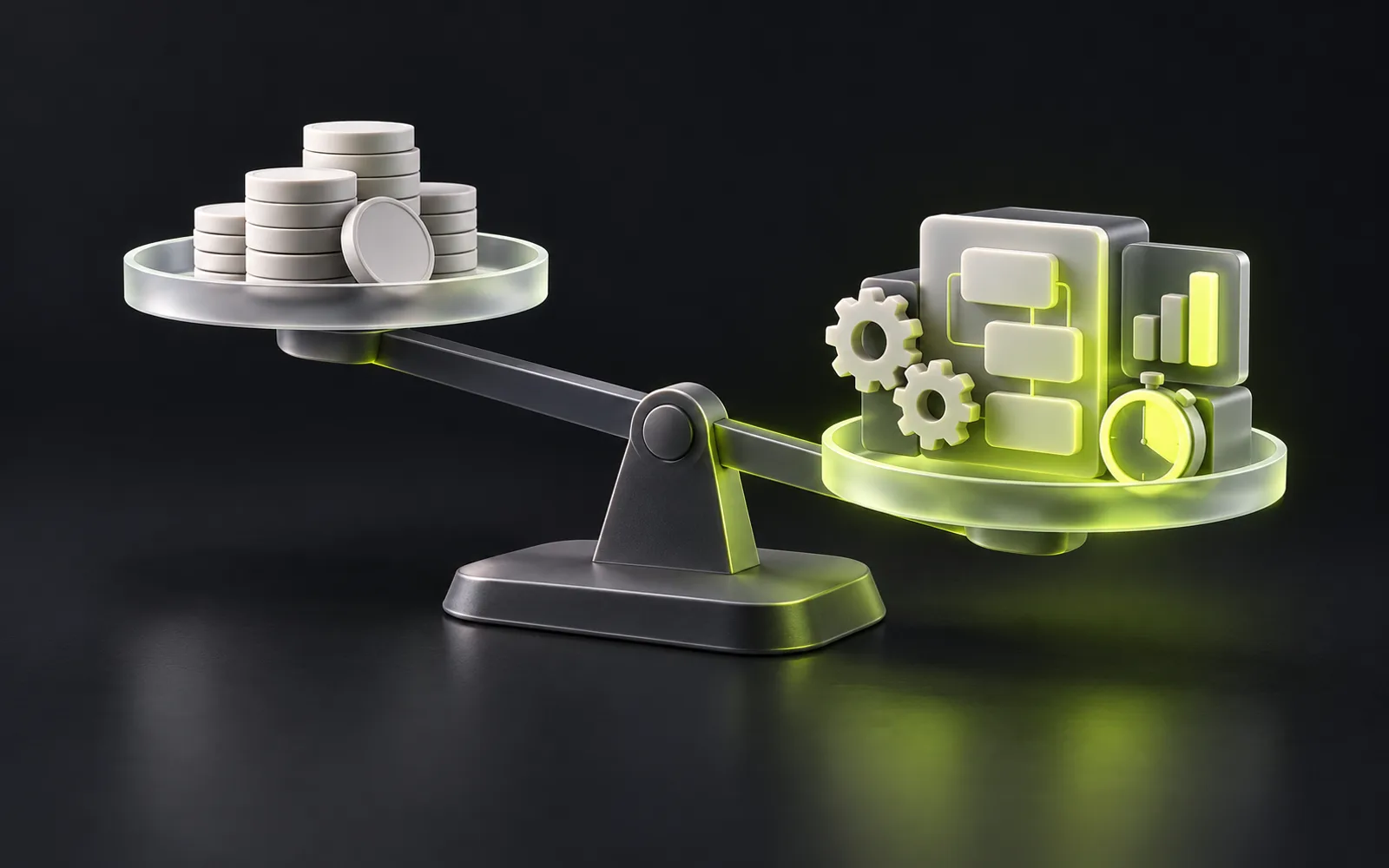
Don't compare the development price with a monthly subscription — compare the total cost of ownership over a 2–3 year horizon:
Off-the-shelf CRM
- Quick start with no development
- The subscription grows with the number of users
- Non-standard processes — through integrator customizations
- The process adapts to the system
Custom CRM
- One-off development plus maintenance
- No per-user fees
- The system mirrors your process, not the other way round
- Higher upfront investment and a longer launch
To calculate it, take the current vendor price list for the ready-made system, multiply by the number of users, allowing for team growth over 2–3 years, and add the cost of customizations. If your processes are standard, the ready-made system almost always wins — and we'll tell you so at the brief. A detailed breakdown of this choice is in "Custom CRM or Bitrix24: How to Choose".
What goes into the first phase
- A customer card with the full communication history in one place
- A deal pipeline with the stages of your own process
- Leads from key channels captured without manual re-entry
- Tasks and reminders for managers
- Roles: manager and head of sales
- Basic reports on the pipeline and channels

How CRM development works
Sales process audit
We trace a lead's path from first contact to payment, recording the stages, roles and losses.
Pipeline and card prototype
Clickable screens: managers see the future system before the first line of code.
Development in sprints
Working modules appear early — you can try them and adjust.
Migration and rollout
Data is moved with tested scripts, and the team switches over in stages.
Growth
Integrations, reports and automation for the next phases — based on how the system is actually used.